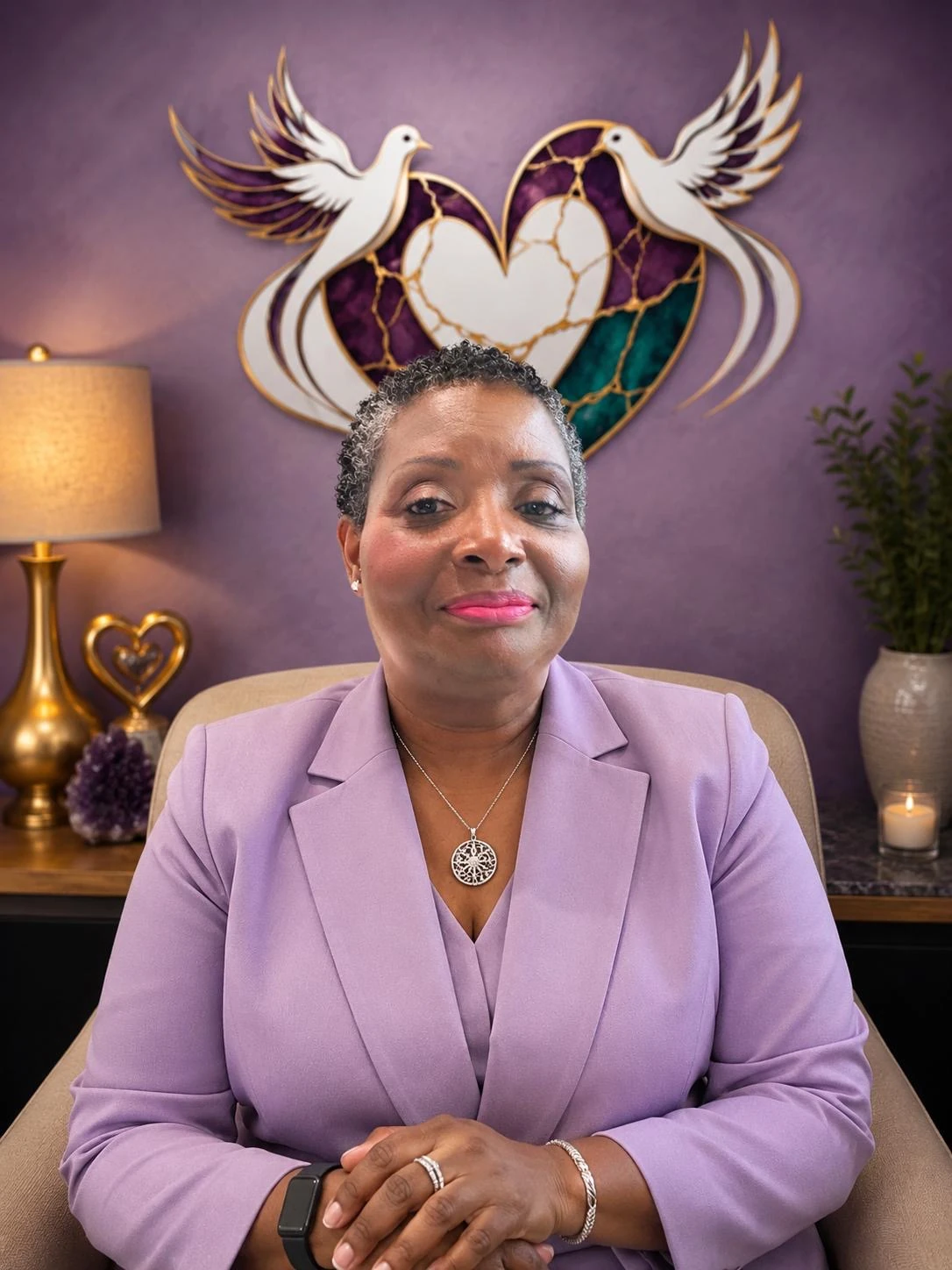
Meet Jean-Ann Moses, LMHC, LPC

You should not have to leave parts of yourself outside the room.

Jean-Ann Moses is a Florida Licensed Mental Health Counselor, South Carolina Licensed Professional Counselor, Certified Grief Educator, and founder of Peace from Pieces. She built this practice as a place where you can bring the whole story, not only the parts that are easy to say aloud.

When you sit with Jean-Ann, she goes to the heart of the matter. The work is warm and compassionate, but it is never vague. She listens for what is actually true and reflects it with honesty, clarity, and care.

Her path to counseling

She understands transition from the inside.

Jean-Ann Moses, LMHC, LPC, wearing a purple suit beneath the Peace from Pieces mark
Jean-Ann MosesLMHC, LPC

Jean-Ann came to counseling after decades in banking, finance, and sales and after navigating reinvention in her own life. She understands the endings people do not choose, the roles they outgrow, the responsibilities they carry, and the slow work of becoming someone new.

That lived understanding does not replace clinical education and training. It deepens her ability to recognize the whole person behind the presenting concern.

I lived it, so I can see it clearly.

Jean-Ann Moses, LMHC, LPC

Therapy that honors the whole person

A place for all of who you are.

Culture, race, identity, relationships, family history, values, faith, sexuality, gender, and lived experience can shape how we understand the world. When those parts matter to what brings you to therapy, there is room for them here.

Jean-Ann welcomes people across cultures, racial and ethnic backgrounds, belief systems, sexual orientations, gender identities, family structures, and life experiences, including members of BIPOC and LGBTQ+ communities. You do not need to explain away who you are, and nothing will be assumed or imposed.

If faith or spirituality is a source of strength, it can be included. If you are questioning what you believe, there is room for that too. If religion or spirituality is not part of your life, it does not need to become part of your therapy. This is licensed clinical care, not religious counseling and not a prescribed way of thinking.

You are welcome as you are, not as someone else expects you to be.
What may be part of the conversation

Your context belongs in the room.

Culture, Identity and Family Context

Understanding how background and lived experience shape the present.

  • Cultural, racial, and ethnic identity
  • Bicultural and multicultural experiences
  • Generational expectations, family roles, and boundaries
  • Immigration, relocation, community, and belonging

Relationships, Identity and Belonging

Making room for identity and relationships without assumption or judgment.

  • LGBTQ+ identity, relationships, and family experiences
  • Self-acceptance, belonging, and decisions about disclosure
  • Marriage, partnership, and family relationships
  • Rejection, isolation, or family and community conflict

Faith, Meaning and Personal Beliefs

Beliefs may be included, questioned, or left outside the work according to your needs.

  • Faith as a source of resilience
  • Personal values, ethics, and meaning
  • Religious hurt, pressure, burnout, or deconstruction
  • Rebuilding meaning honestly and on your own terms

Approaches we may use

The approach should fit the person.

Jean-Ann does not expect every person or every concern to fit one treatment model. She explains the options in plain language and works with the client to determine what fits. Depending on the concern, care may draw from the following approaches.

Psychoeducation

Psychoeducation means learning how emotions, thoughts, behavior, relationships, grief, trauma, stress, and the nervous system may be affecting you. Understanding what is happening can reduce shame and help you make more informed choices.

Cognitive Behavioral Therapy (CBT)

Cognitive Behavioral Therapy helps identify connections among thoughts, emotions, and behavior. It can help you notice unhelpful patterns, examine what is accurate, and practice responses that better support the life you want.

Somatic and Nervous-System-Informed Work

Somatic work pays attention to how stress and emotion show up in the body. Grounding, breathing, body awareness, movement, and regulation skills may help you feel more present and able to respond.

Relationship and Couples Approaches

Relationship work may draw from couples, marriage, and family counseling; Gottman Method principles; communication education; cognitive behavioral strategies; somatic awareness; and other evidence-based practices. No single model is presented as the whole of couples counseling.

Trauma-Informed Care and EMDR

Trauma-informed care considers safety, choice, readiness, history, and the effects of overwhelming experience. Eye Movement Desensitization and Reprocessing (EMDR) may be considered for trauma when it is clinically appropriate, but it is not assumed to be the right method for every person.

Grief-Focused Care

Grief-focused care makes room for loss, meaning, continuing bonds, identity, and life after change. It does not force closure or treat grief as something that should follow a fixed timetable.

Credentials and clinical focus

Licensed, trained and accountable.

  • Florida LMHC #MH22940
  • South Carolina LPC #10996
  • NPI 1063081958
  • Certified Grief Educator

Jean-Ann's education and professional development include couples, marriage, and family counseling; Gottman Method Couples Therapy Level II; Eye Movement Desensitization and Reprocessing (EMDR); Cognitive Behavioral Therapy (CBT); psychoeducation; somatic and trauma-informed practices; grief-focused work; and other evidence-based approaches.

Scheduling, intake, payment, and clinical information are managed through secure clinical systems after you connect. Many insurance plans and private-pay options may be available. Coverage, rates, service format, and session length are reviewed before scheduling.